Category: Laban

  • Berkeley Cafe Colloq: October 13, 2011

    (An informal monthly-ish gathering focused on Laban Movement Analysis. Attending: Peggy Hackney, Brenton Cheng.)

    Highlights:

    • Laban’s “Dynamosphere” is a visual representation of the various flavors of Action Drive and their relationships. It maps each variation to a location in space, based on its component Efforts. Collectively, they form the vertices of a cube. It has been noted by many (Geoffrey Longstaff, Peggy Hackney, etc.) that the use of space in this representation is metaphorical (or “formal” or “conceptual”) space; it facilitates visualizing the relationships among the Effort combinations and does not necessarily correspond to actual physical space. Confusion can arise because the Effort directions chosen in this visualization correspond to the directional “affinities” of the basic Efforts in physical space that were commonly observed by Laban, and so it is easy to assume that the Dynamosphere is making a statement about how these variations of Action Drive appear in physical space — e.g. that going to Right Back Low with the left arm will be a Punch. Laban’s writings suggest that the Dynamosphere was actually primarily a way to make it easier to see Effort relationships.
    • Normally, the component Efforts on which the standard Effort Cube is based are Weight, Time, and Space — no Flow. One can create three other “Flow-ful” Effort Cubes by replacing each of the axes, i.e. each of the component Motion Factors, with Flow. So, instead of the Vertical axis representing Weight Effort, it could be assigned to Flow, with perhaps Free Flow in the Upward direction and Bound Flow in the Downward direction. Going Right, Forward, High with the right arm would then be  Indirect, Sustained, Free Flow. How would the Diagonal Scale feel using each of these altered cubes? 🙂
    • Could the entire taxonomy of LMA terms be mapped to a tree structure? What would be the starting node, the root node? “Laban Movement Analysis”? “Unspecified Action”? And where would the “meta-themes” of Exertion/Recuperation, Inner/Outer, Function/Expression, Stability/Mobility, etc. be located? Perhaps the tree structure of Motif Notation symbols could provide a starting point.
  • Berkeley Cafe Colloq: September 29, 2011

    (An informal monthly-ish gathering focused on Laban Movement Analysis. Attending: Peggy Hackney, Brenton Cheng.)

    Highlights:

    • Continuous Dream State
      Continuous Dream State (IMS)

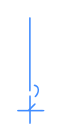
      For non-stretchable symbols, how should one indicate that the action continues for some length of time? In Charlotte Wile’s “Moving About”, a wavy line indicates “continue freely in the previously stated manner”, but this is then clarified as being a “repeat” rather than an extended duration. Similarly, in the first edition of Anne Hutchinson Guest’s “Your Move”, repetition is addressed but not duration for non-stretchables. In the Integrated Movement Studies cert program, we attach the Unspecified Action Stroke to the symbol via a tiny bow to indicate continued duration. However, some feel this could be confused with the initial action happening momentarily and phrasing into an Unspecified Action.

    • In the IMS program, when teaching the Modes of Shape Change, we often refer to a relationship aspect of each mode, saying that Shape Flow is “self-to-self”, while Directional and Carving are “self-to-other”. While these relational intentions may be a part of *why* the mover activates a particular Mode, I have stopped making them a part of the *definition* of the Modes, because I think they depart from observable, physical description and enter the realm of observer projection on the mover. Instead, I keep my definitions strictly about Shape: Shape Flow is “non-localized, often amoeba-like shape change”; Directional is “linear or planar shape change towards a destination point”; Carving is “three-dimensional voluminous shape change”. I’m still playing with these definitions.
    • At times, the various schools of Laban debate whether certain qualities “exist”. e.g. Effort is completely absent from “Your Move”. Perhaps more useful questions are: “Does the particular concept serve?” or “Does adding granularity in this way enrich the discussion of movement?” Heck, the entire LMA framework is a conceptual fabrication. But it sure makes the experience of movement and movement observation so much juicier!